
The Invisible Risk Beneath Our Homes
Many of the most important aspects of a home are never seen. Air sealing, insulation, drainage, and indoor air quality all work quietly in the background to create a healthier and more durable living environment.
Radon is one of those invisible considerations.
What Is Radon?
Radon is a naturally occurring radioactive gas formed by the breakdown of uranium in soil and rock. It is colorless, odorless, and impossible to detect without testing.
As the soil beneath a home releases radon gas, pressure differences between the interior and exterior of the building can draw the gas inside through cracks, joints, utility penetrations, and other openings in the foundation system.
Long-term exposure to elevated radon levels has been linked to lung cancer, making it an important part of creating a healthy home.
Understanding Radon Levels
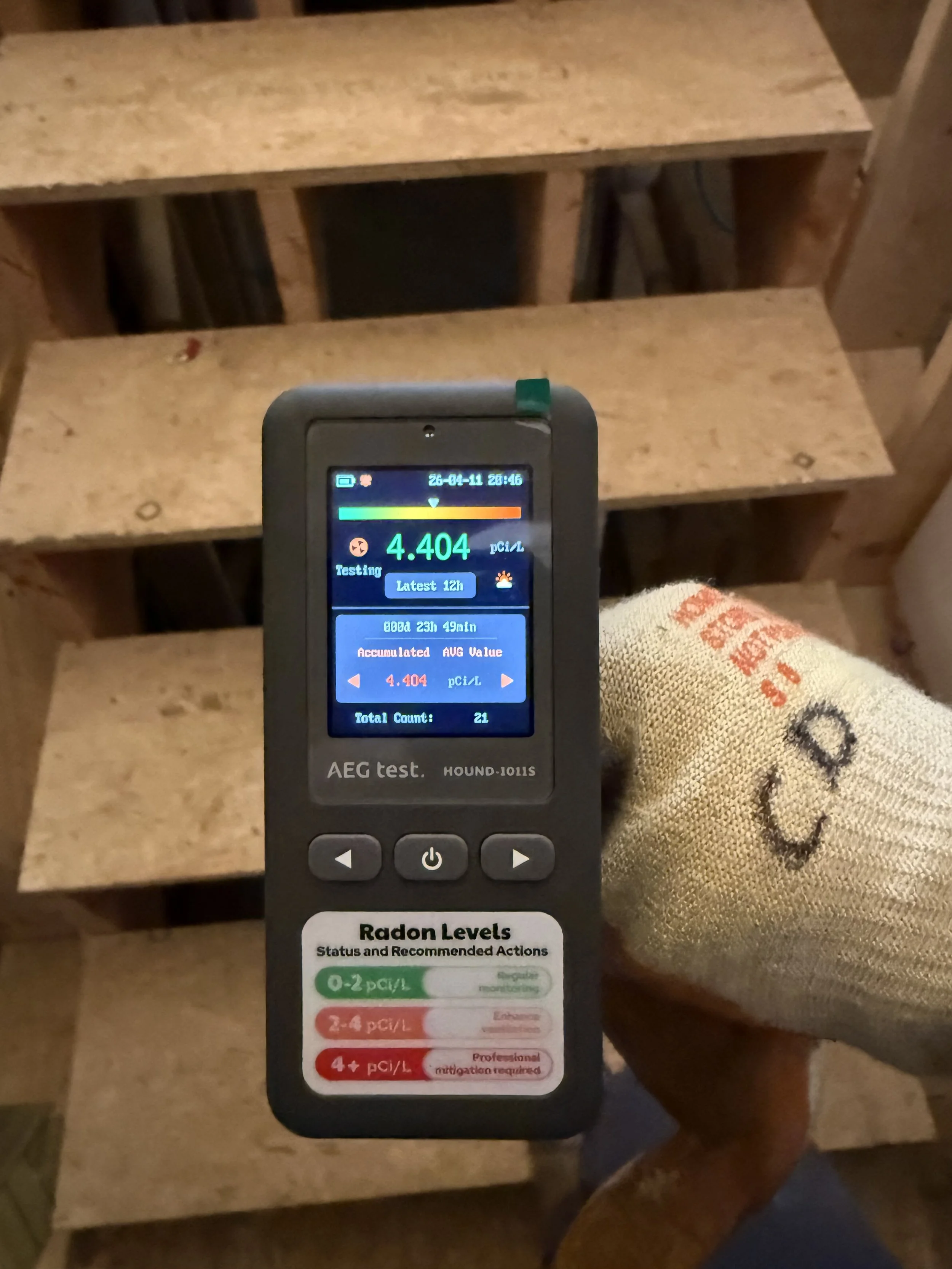
Radon concentrations are measured in picocuries per liter (pCi/L).
The EPA recommends taking action when levels reach or exceed 4.0 pCi/L. While lower levels are generally considered acceptable, many homeowners choose to reduce exposure whenever practical.
The only way to know your home's radon level is to test.
Our Approach
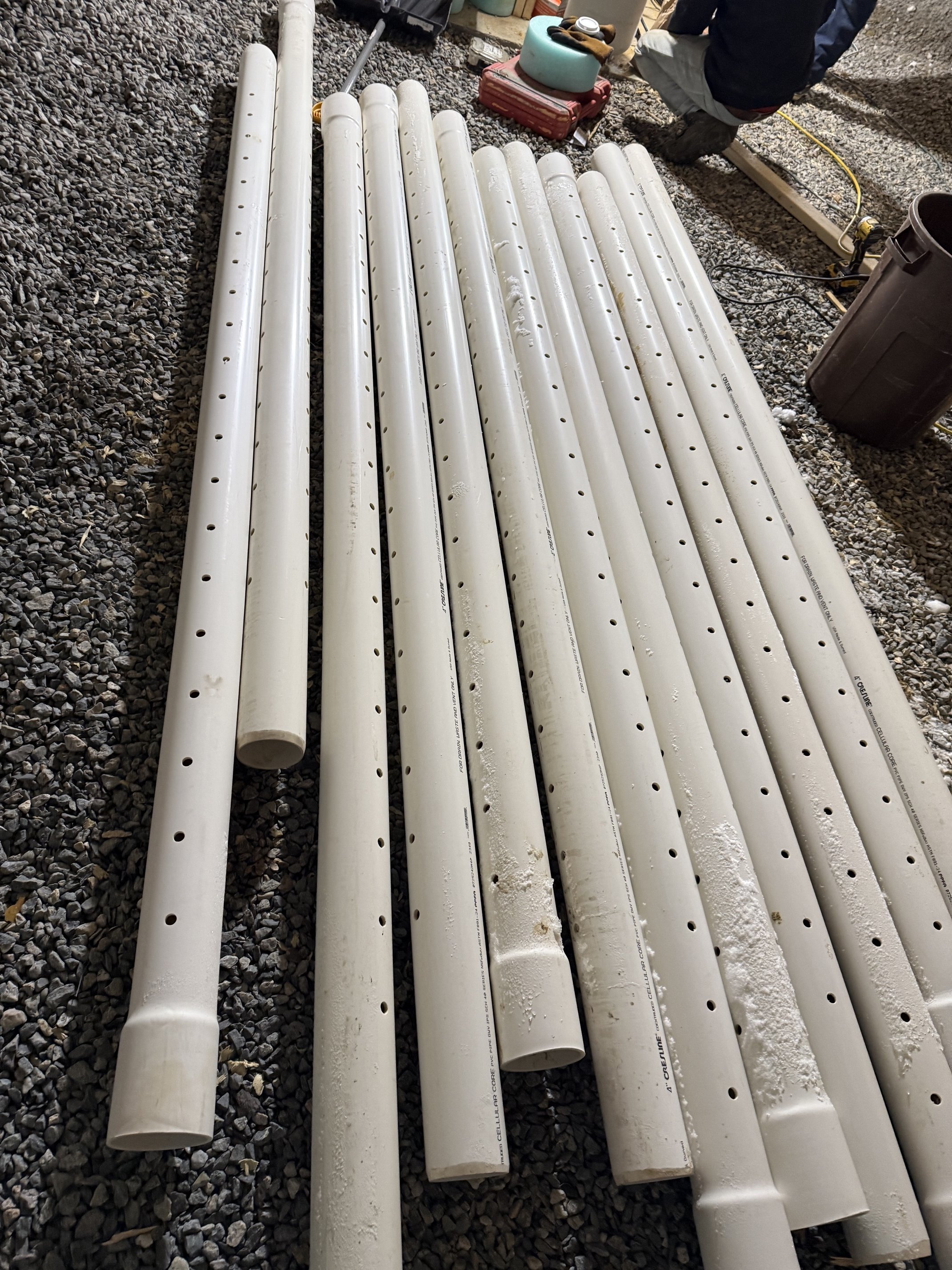
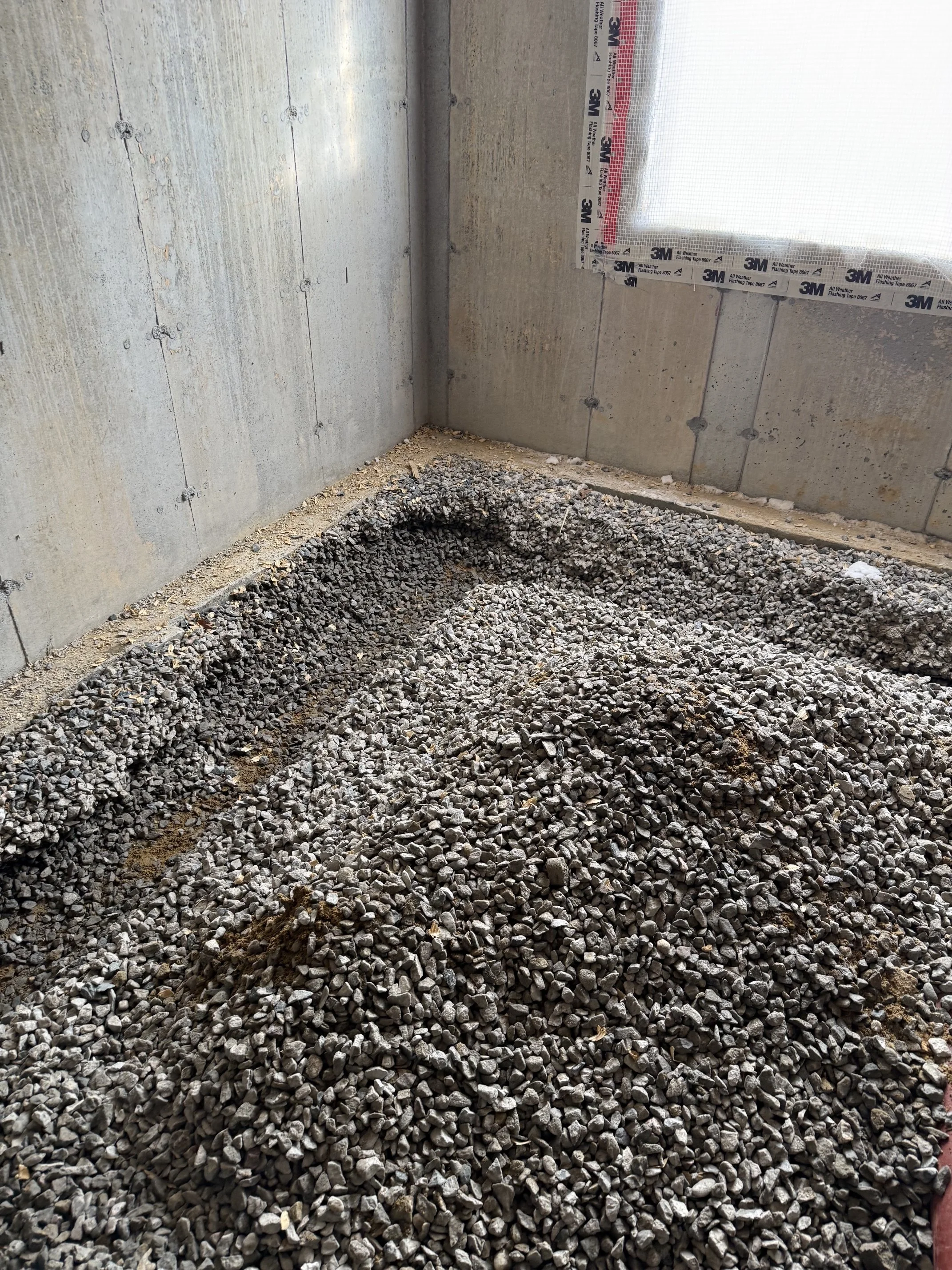
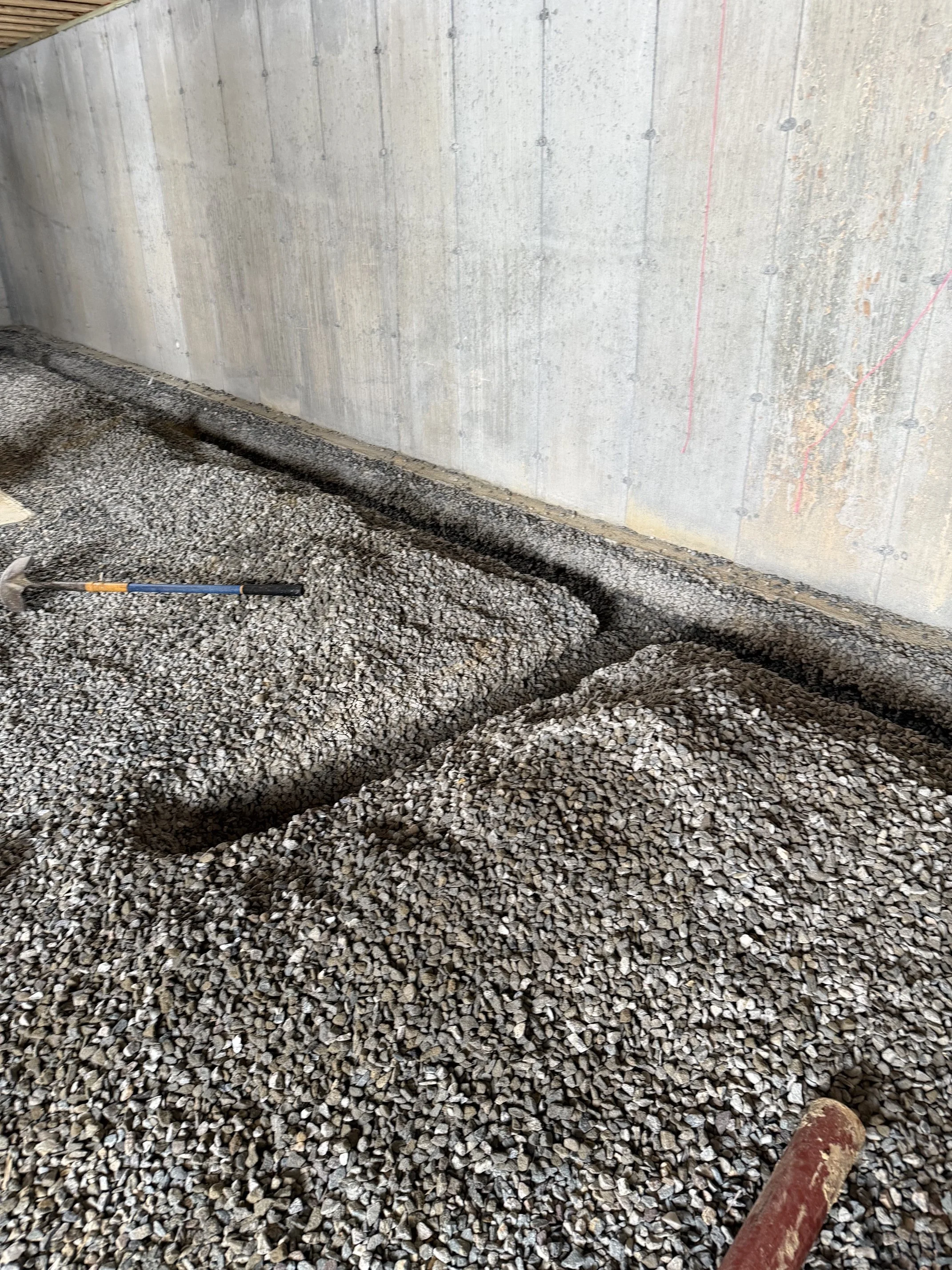
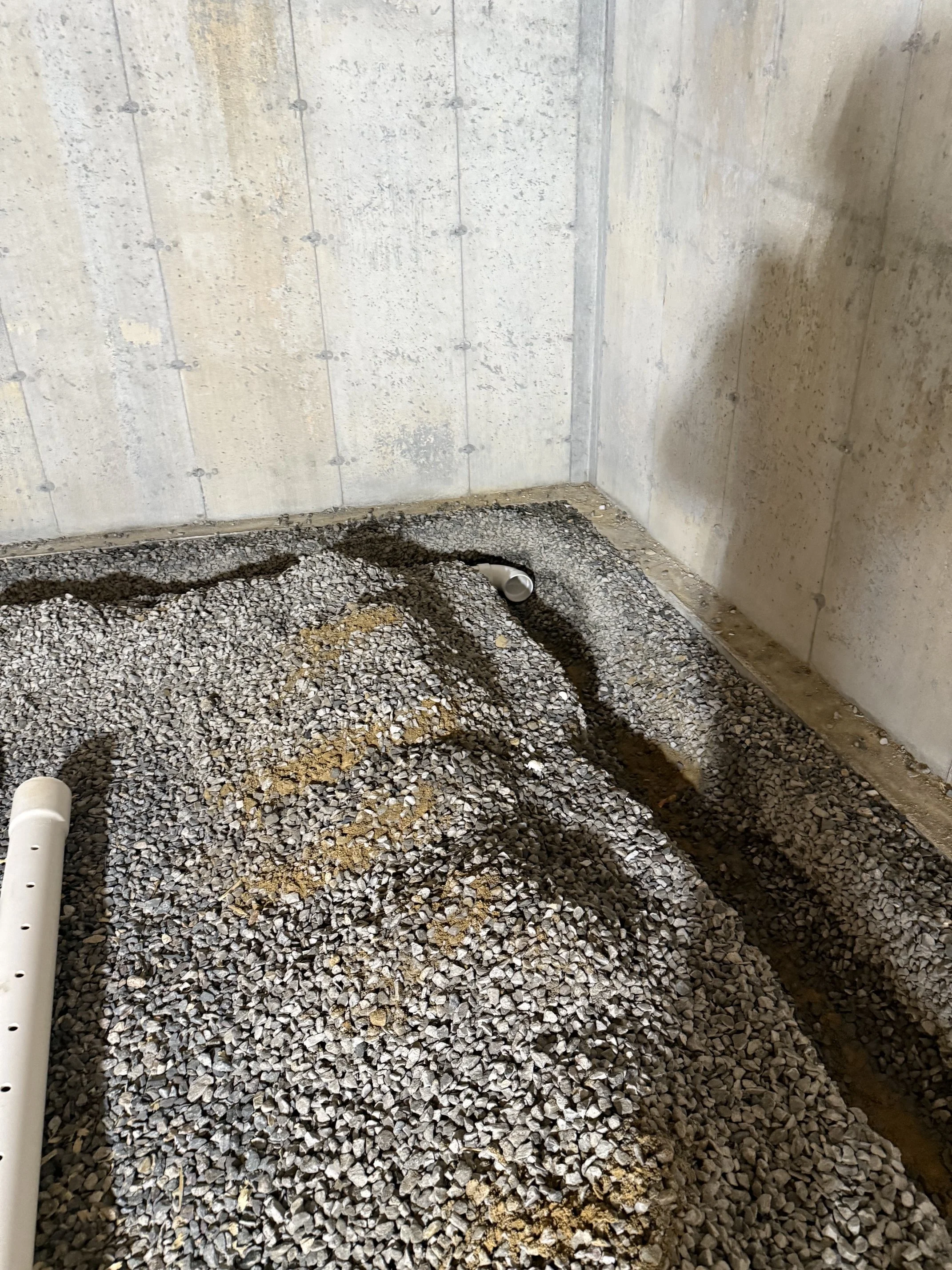
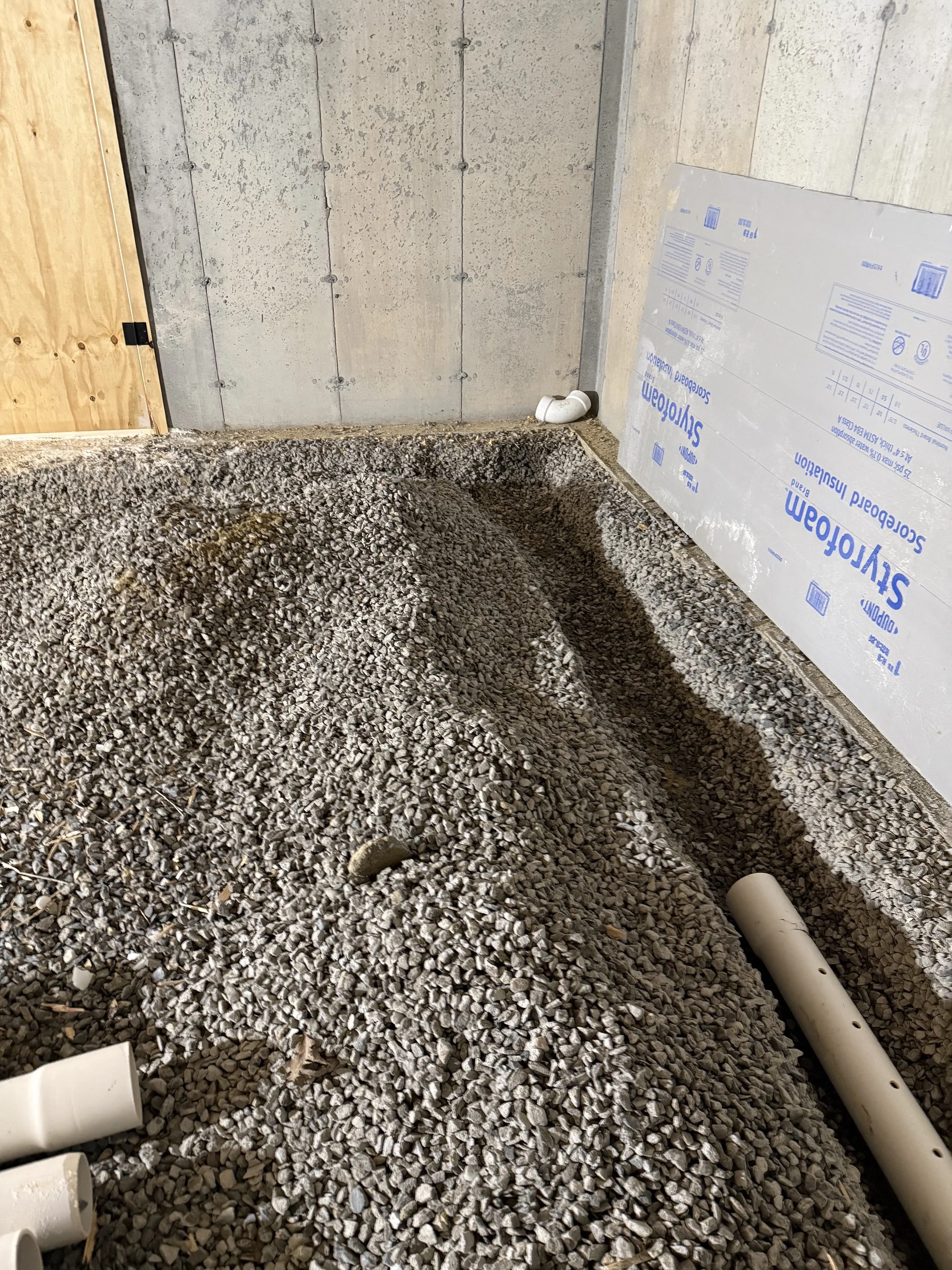
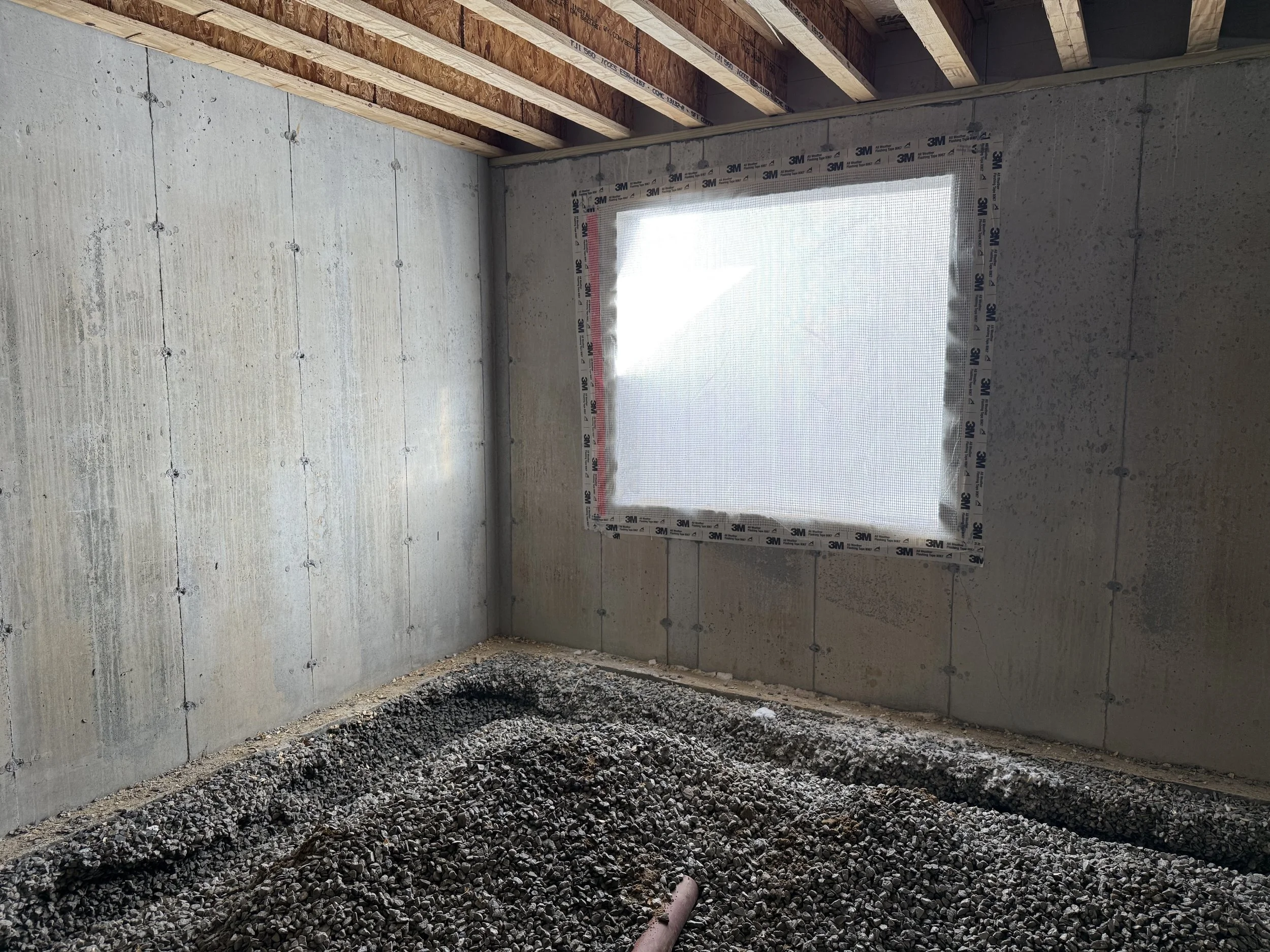
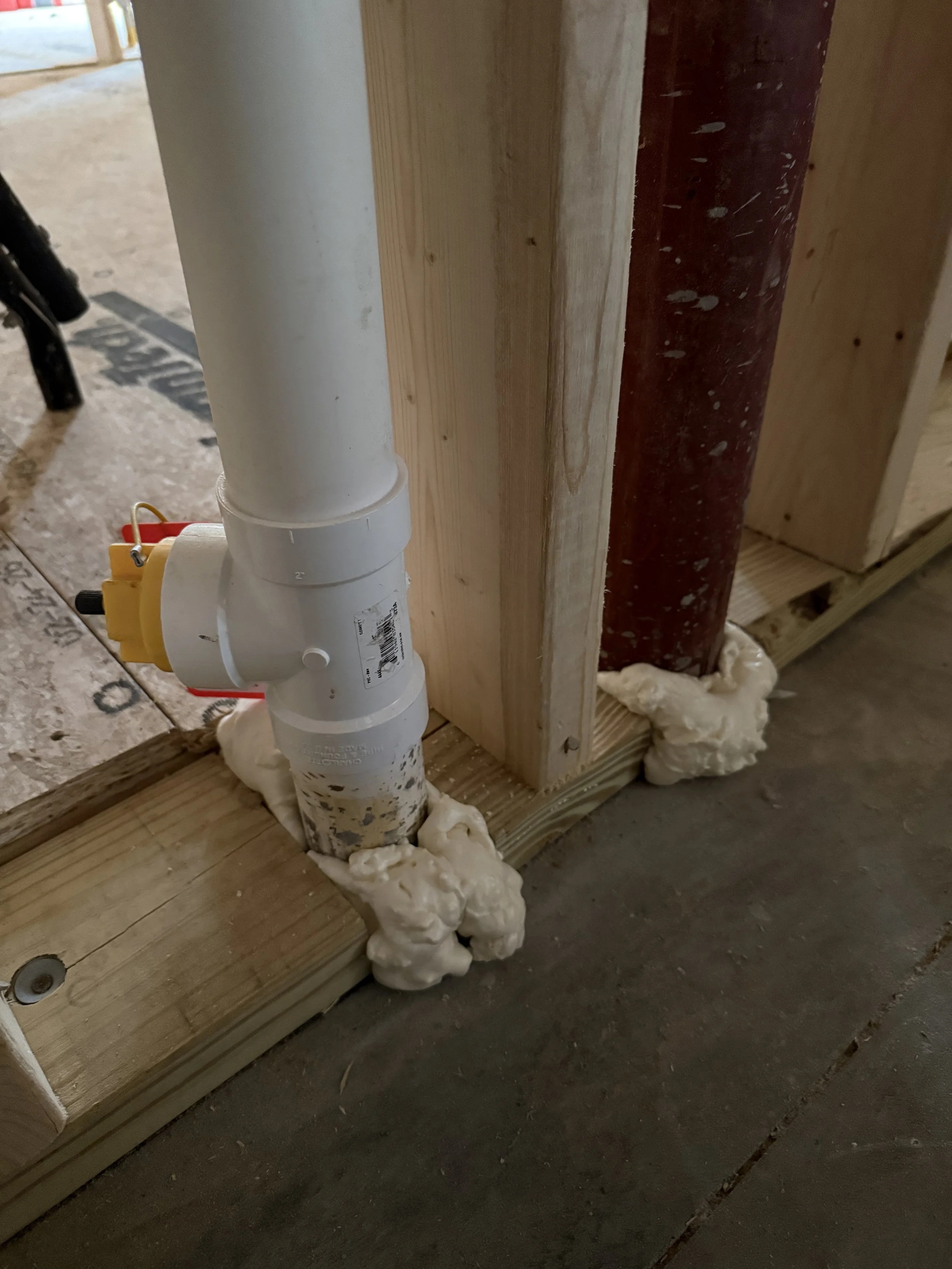
We incorporate a passive radon mitigation system in almost every new construction project. Often referred to as a radon loop, this system provides a pathway for soil gases beneath the slab to vent safely above the roofline.
The cost of installing this system during construction is relatively small, while the benefits can be significant if elevated radon levels are ever detected.
Equally important is limiting the pathways that allow soil gases to enter the home in the first place.
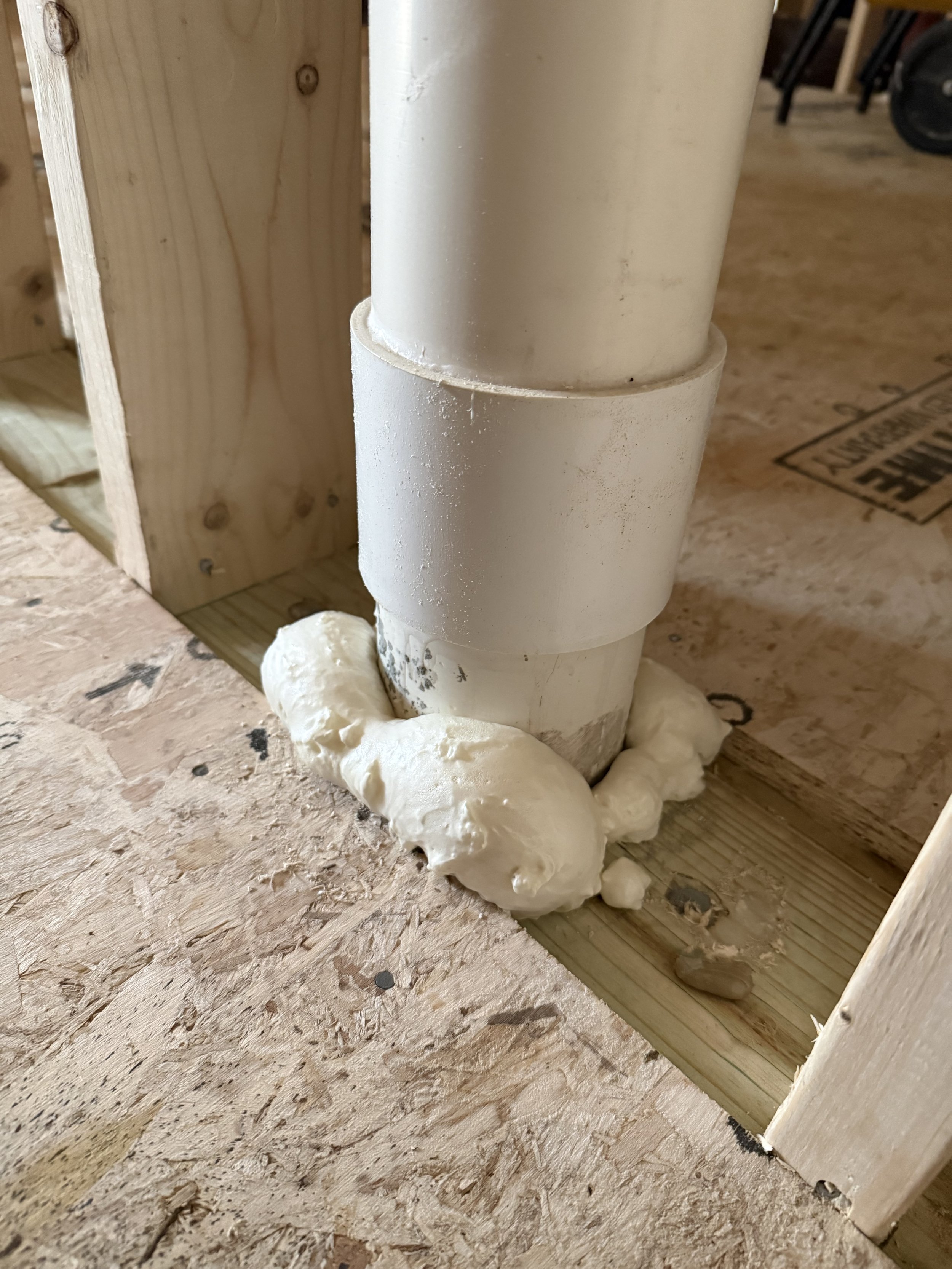
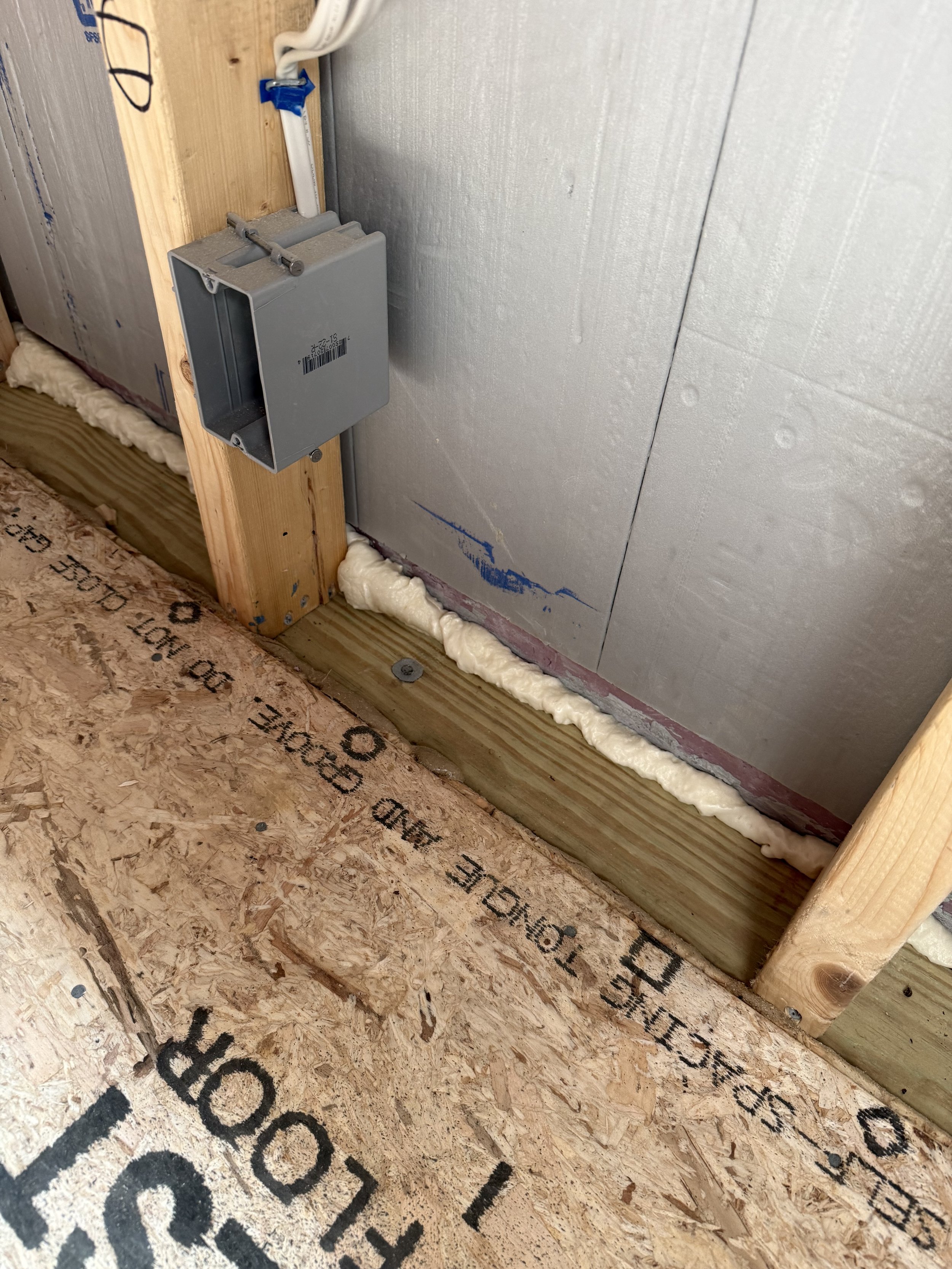
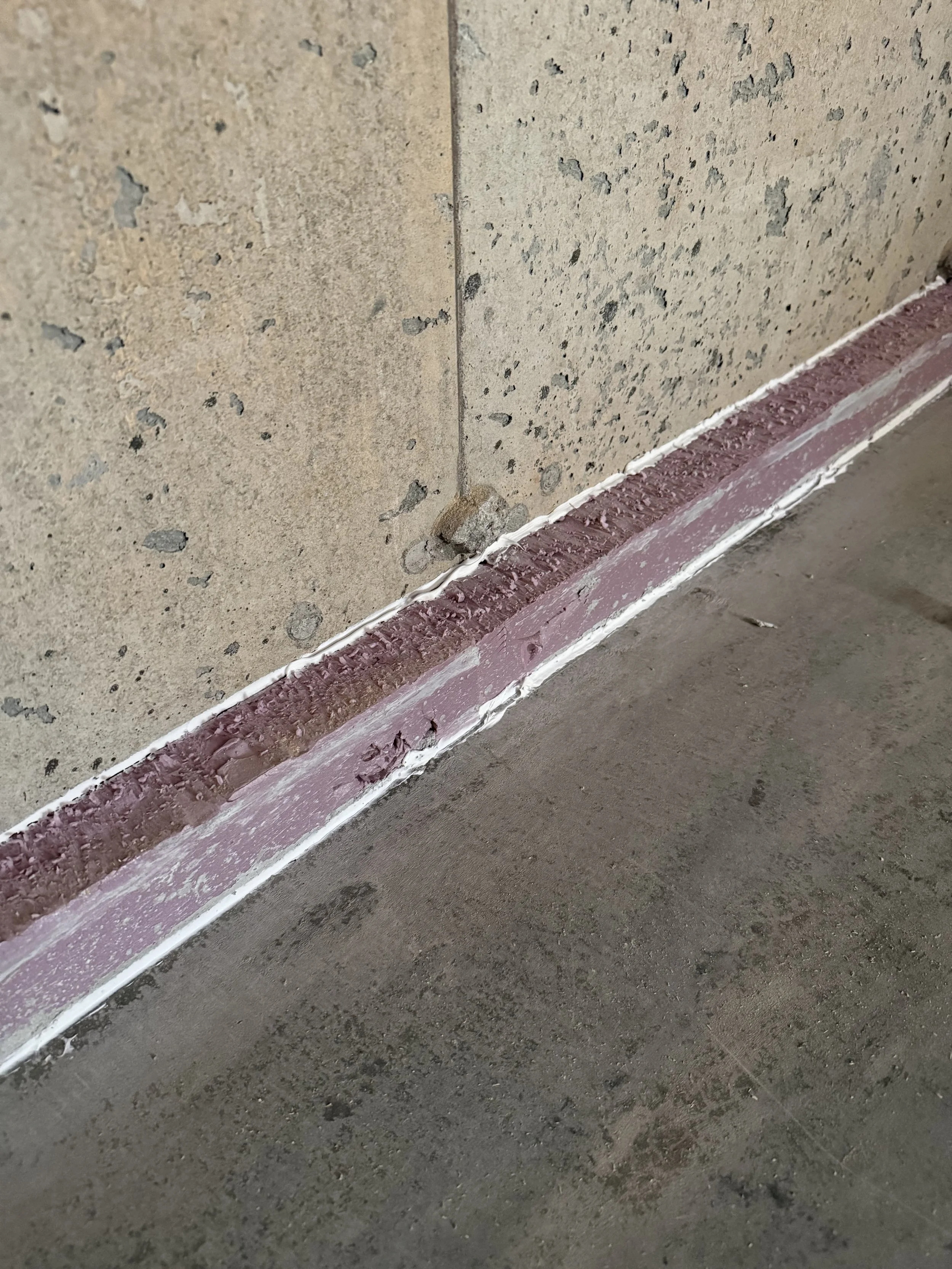
We pay close attention to air sealing at the foundation perimeter, slab edges, utility penetrations, and other transitions between the building and the ground. These details strengthen the building enclosure, improve energy performance, and help reduce radon entry points.
A Real-World Example
One of our recent projects demonstrated the value of these measures.
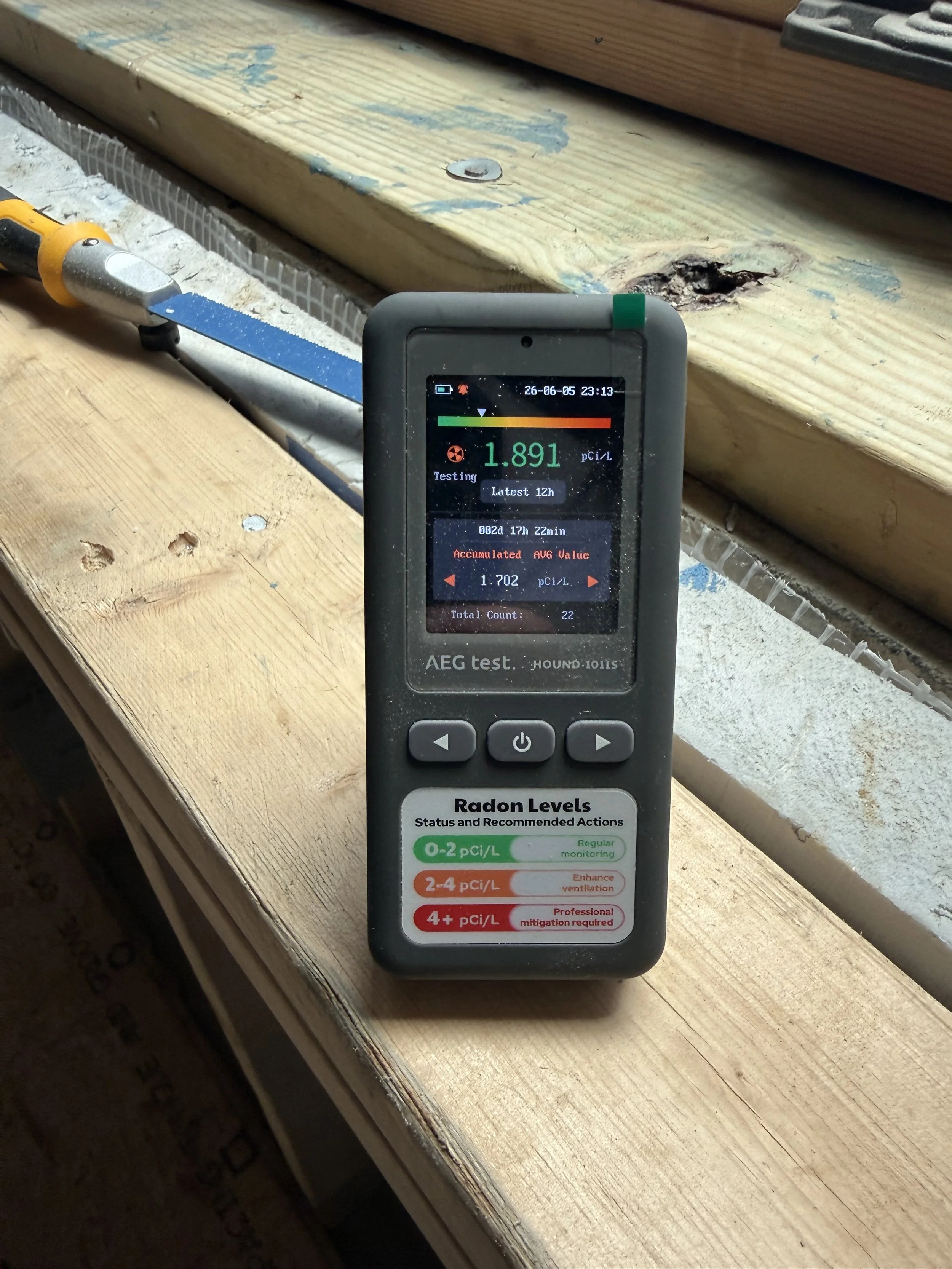
Initial testing indicated radon levels of approximately 4.40 pCi/L, just above the EPA action threshold.
Following additional air sealing at the foundation perimeter and slab penetrations, radon levels dropped to approximately 1.89 pCi/L.
While every project and site condition is unique, the results illustrate an important principle: reducing the pathways that allow soil gases to enter the home can have a meaningful impact on indoor air quality.
When Additional Mitigation Is Needed
In some cases, elevated radon levels may still be present despite careful air sealing and passive venting.
Fortunately, because every Studio Donato project includes a radon loop, converting the system from passive to active operation is straightforward. A small inline fan can be added to create continuous negative pressure beneath the slab, drawing soil gases into the vent pipe and exhausting them safely above the roof.
Active radon mitigation systems are highly effective and often reduce radon levels substantially.
Building Healthier Homes
Good building science is often measured by the details that homeowners never see.
Thoughtful air sealing, continuous air barriers, proper drainage, and radon mitigation all contribute to a healthier, more durable home. While these systems may remain hidden behind finishes, their impact is felt every day through improved comfort, performance, and peace of mind.
We believe these details are not optional upgrades. They are fundamental components of a well-designed home.